Publications
Our publications span computational design, geometric modeling, artificial intelligence, engineering analysis, manufacturing, and multidisciplinary applications. The selections below highlight the development of the laboratory’s research—from human-centered geometric modeling and learned shape representations to generative design, scientific machine learning, intelligent manufacturing, and engineering-focused AI.
For citation counts and author profiles, see Google Scholar, ORCID, and ResearchGate. Preprints may be requested by email.
Foundational work in geometric modeling
Our current work in engineering AI builds on a long-running program in geometric representation and interaction. Our representative contributions include:
- Pen-based styling design of 3D geometry using concept sketches and template models
ACM Solid and Physical Modeling, 2006 - Beautification of design sketches using trainable stroke clustering and curve fitting
IEEE Transactions on Visualization and Computer Graphics, 2011 - Co-Abstraction of Shape Collections
ACM SIGGRAPH Asia, 2012 · Video - Co-Constrained Handles for Deformation in Shape Collections
ACM SIGGRAPH Asia, 2014 · Video - Semantic Shape Editing Using Deformation Handles
ACM SIGGRAPH, 2015 · Video
Selected contributions
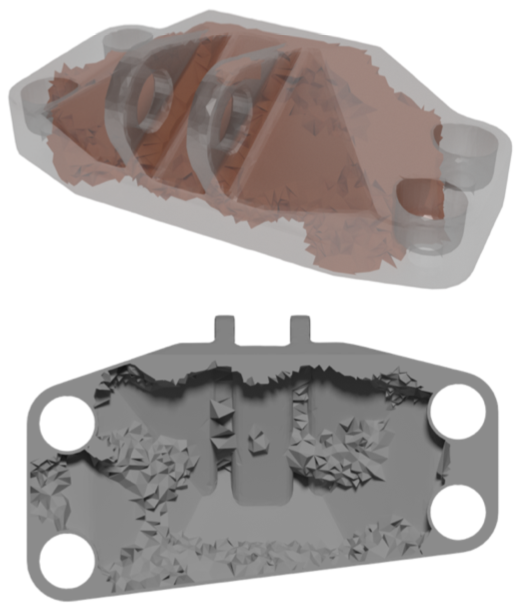
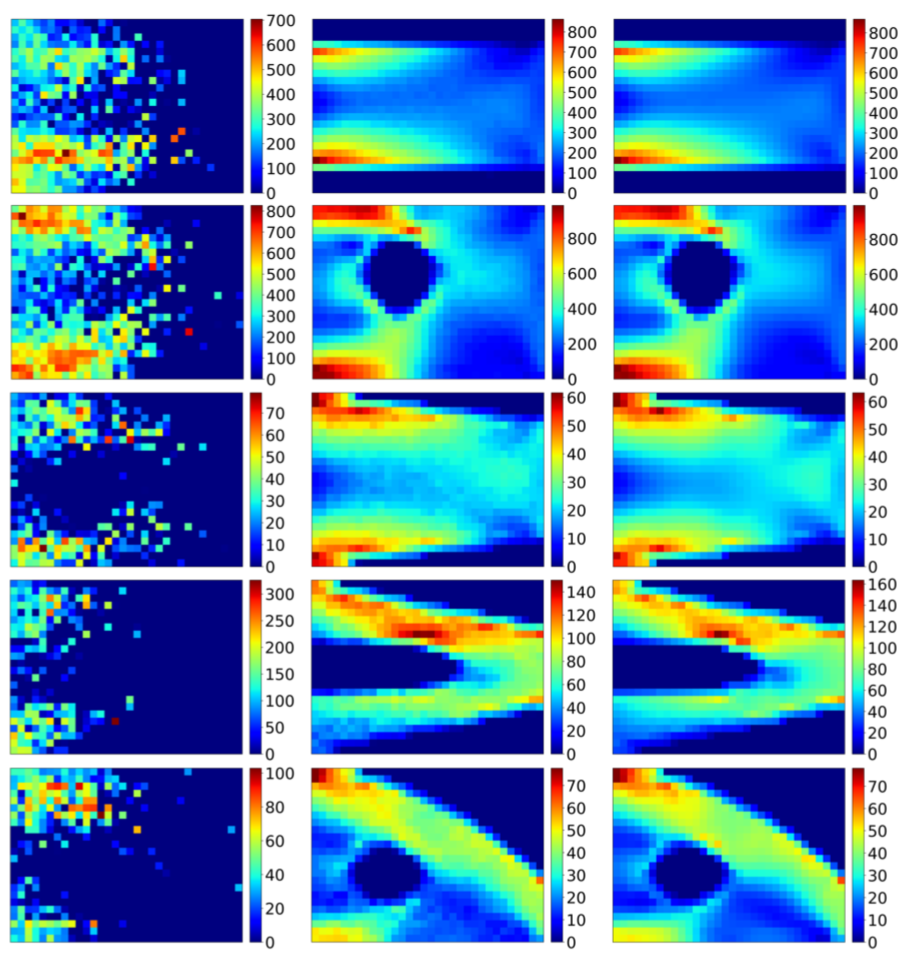
Learning to predict physical fields
This line of work established neural approaches for rapidly predicting stress fields and led to subsequent generative and mesh-based simulation methods.
Zhenguo Nie, Haoliang Jiang, and Levent Burak Kara
Journal of Computing and Information Science in Engineering, 2019
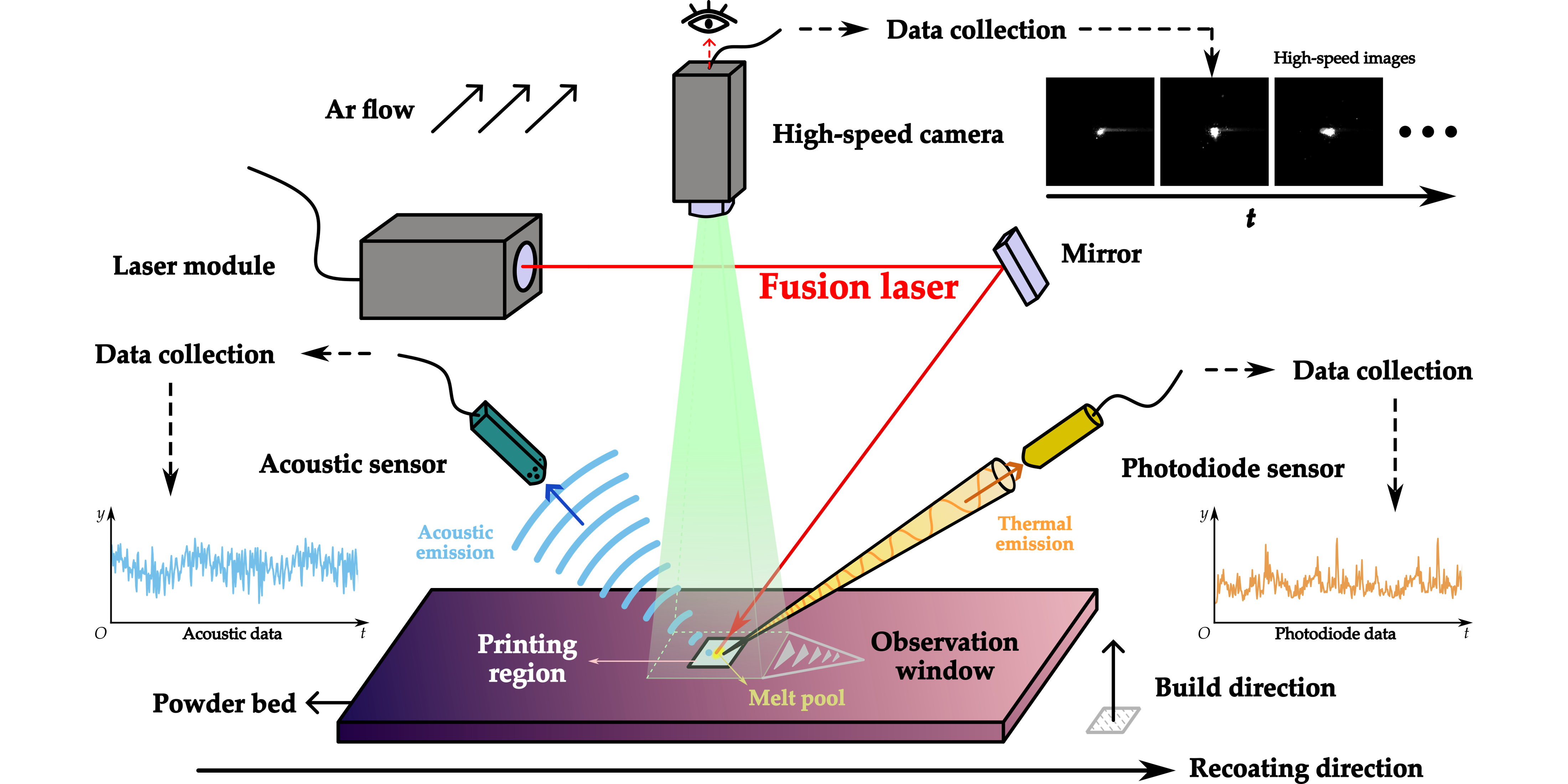
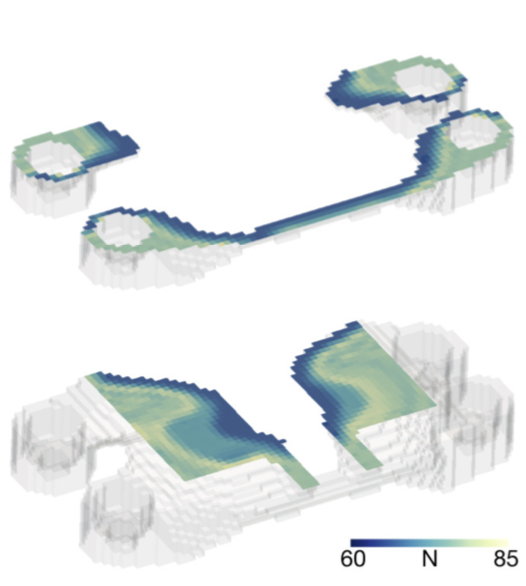
Intelligent monitoring of metal additive manufacturing
Acoustic and thermal measurements are used to infer highly time-resolved melt-pool characteristics and spatially dependent lack-of-fusion defects.
Haolin Liu and collaborators
Additive Manufacturing, 2024
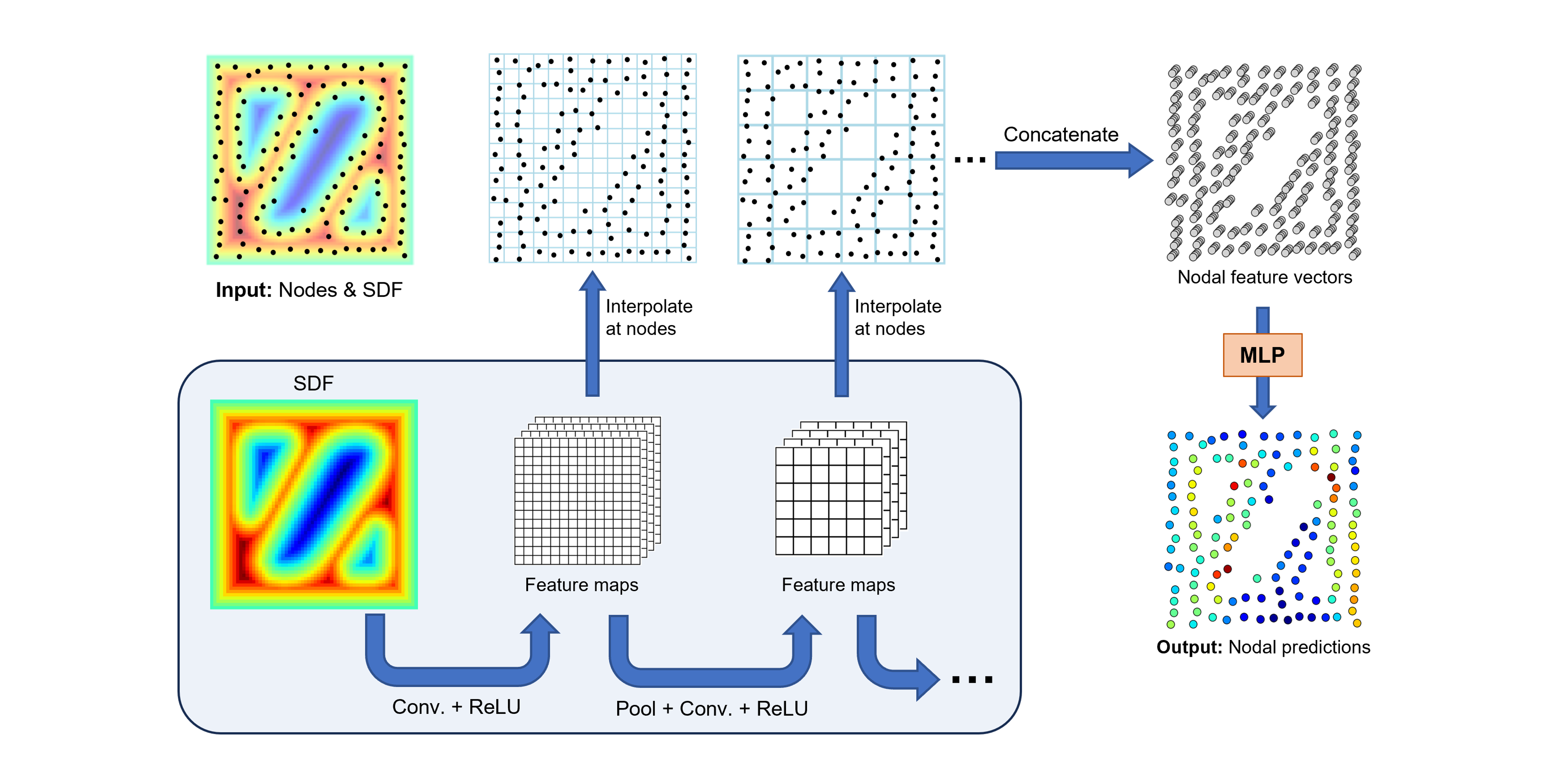
Scalar-field prediction on engineering meshes
Interpolated multiresolution convolutional networks predict physical fields on meshes with differing geometries and resolutions.
Kevin Ferguson, Andrew Gillman, James Hardin, and Levent Burak Kara
Journal of Applied Mechanics, 2024
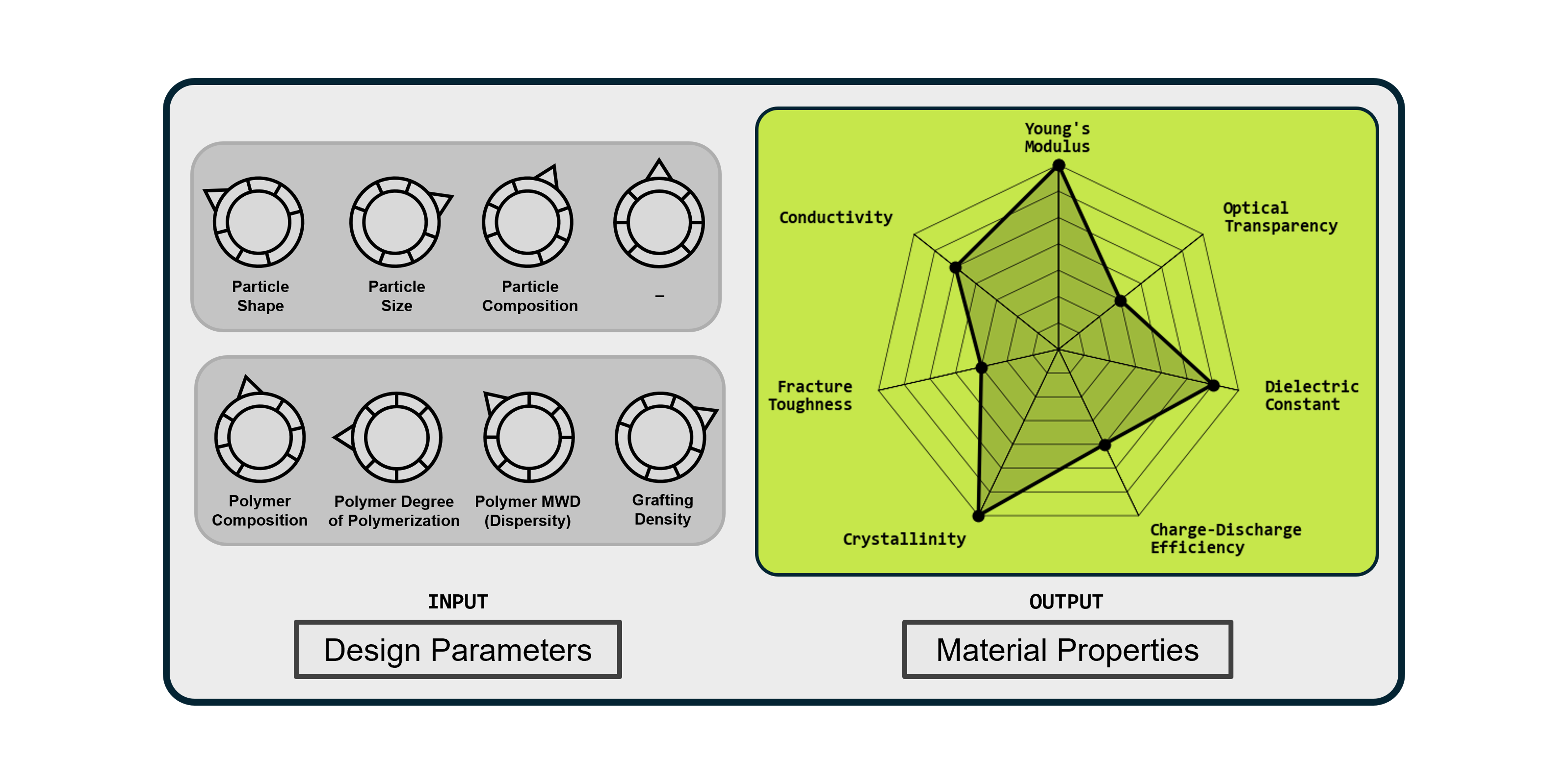
Generative learning for molecular design
Our cross-domain work combines generative deep learning with molecular simulation, including the design of target-specific peptide inhibitors.
Sijie Chen, Tong Lin, and collaborators
Nature Communications, 2024
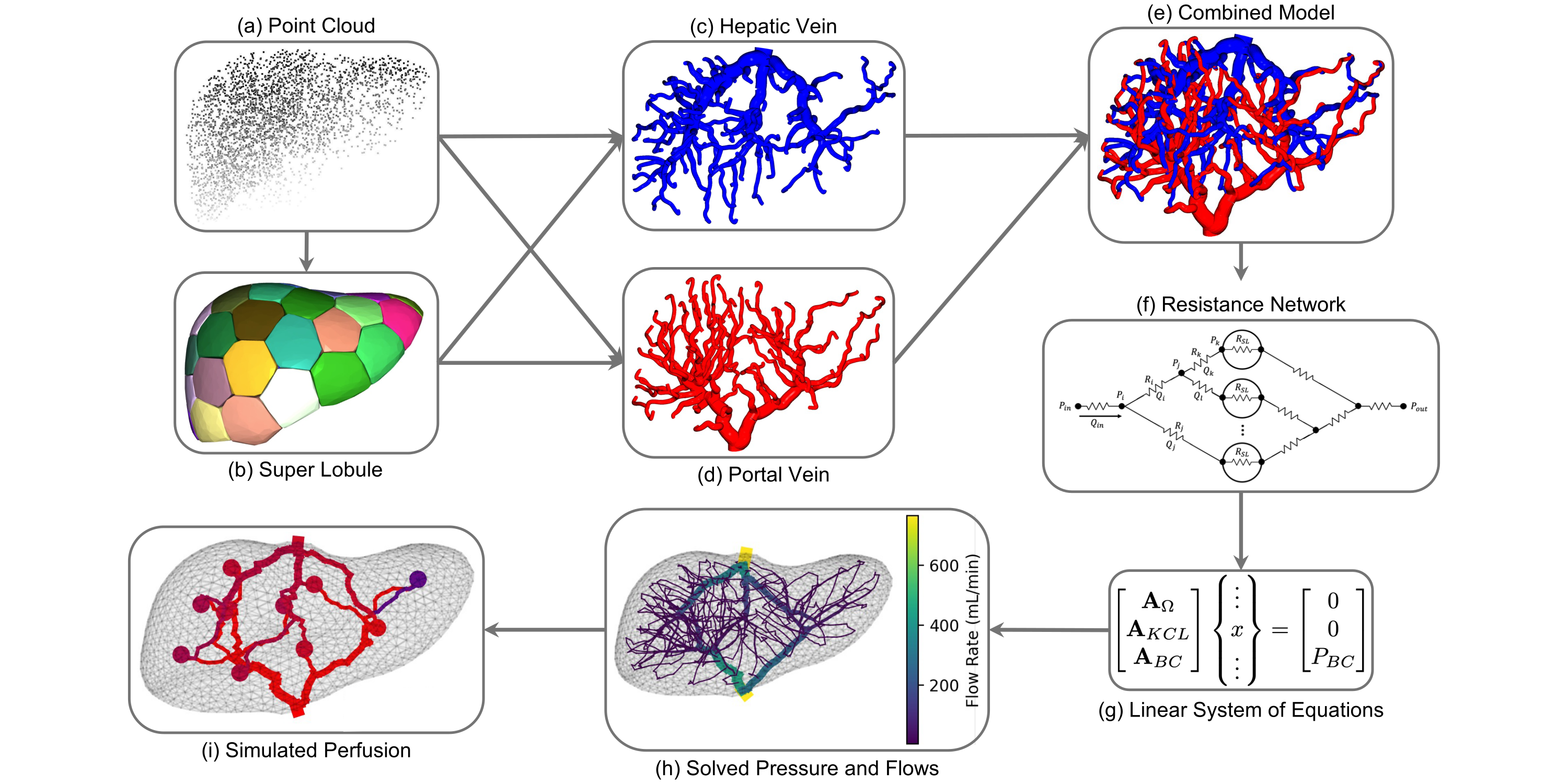
Computational modeling for organ preservation
A simplified liver-perfusion model represents vascular flow and supports computational investigation of organ-preservation processes.
Daniel Emerson, Yoed Rabin, and Levent Burak Kara
Scientific Reports, 2025
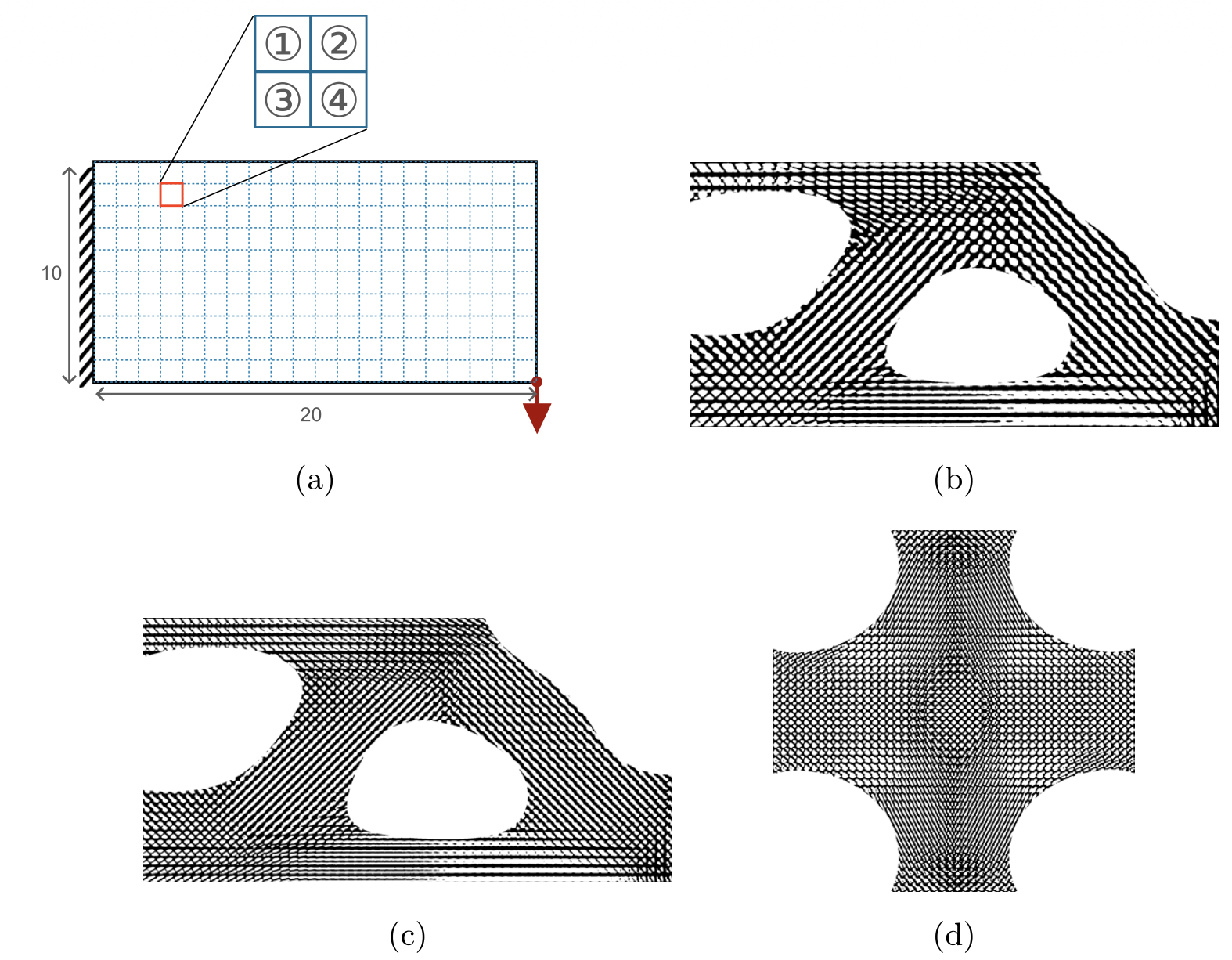
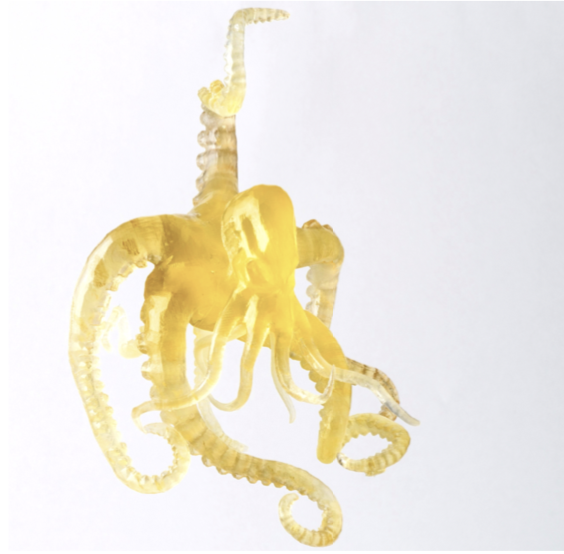
Multi-scale neural topology optimization
Neural models generate fine-scale structural designs across multiple resolutions while preserving mechanical performance.
Hongrui Chen, Xingchen Liu, Liwei Wang, and Levent Burak Kara
Engineering with Computers, 2025
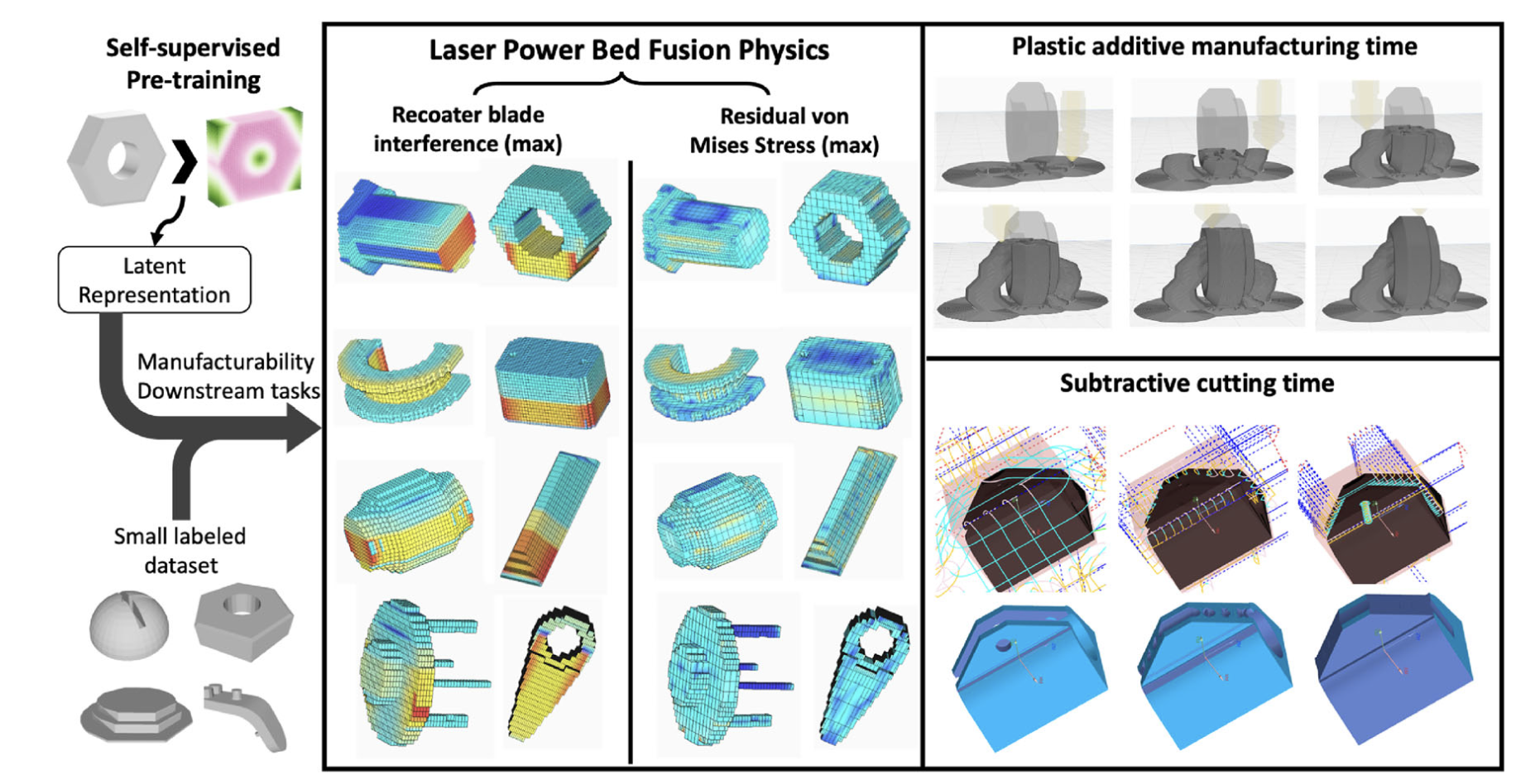
Few-shot manufacturability estimation
Volume-informed representation learning uses geometric information to estimate manufacturability when labeled training examples are limited.
Yu-hsuan Chen, Jonathan Cagan, and Levent Burak Kara
Journal of Intelligent Manufacturing, 2026
Complete publication record
The complete list below is generated from the laboratory’s bibliography and is ordered by year.